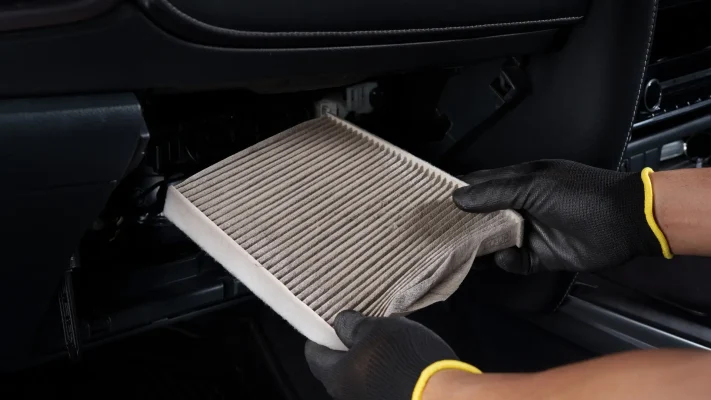
A cabin air filter for wildfire smoke can help reduce the amount of fine particulate matter entering your vehicle through the ventilation system. It cannot make the passenger compartment completely smoke-proof, and its performance depends on the filter type, condition and fit.
During July 2026, smoke from northern Ontario wildfires caused very poor air quality across parts of Southern Ontario. These conditions have made vehicle air quality a practical concern for drivers travelling between London, Sarnia, Kitchener, Brantford, Cambridge and surrounding communities.
Knowing how to use your ventilation system and when to inspect the cabin filter can help reduce smoke exposure while you are on the road.
How Wildfire Smoke Gets Inside Your Car
Wildfire smoke can enter through open windows, doors, body openings and the vehicle’s fresh-air intake.
When the ventilation system is set to bring in outside air, air passes through the cabin filter before reaching the vents. A properly fitted and maintained filter can capture some of the dust, pollen, soot and fine particles carried in that air.
The vehicle is not completely airtight. Smoke may still enter when doors open or through small gaps and pressure changes. No cabin filter should be described as providing complete protection from wildfire smoke.
Health Canada identifies fine particles as the main health risk in wildfire smoke. It also recommends changing a vehicle’s cabin air filter regularly according to the manufacturer’s instructions so the filter remains effective.
What Does a Cabin Air Filter Remove?
A cabin air filter is designed to remove airborne material before it reaches the heating and air-conditioning vents.
Standard filters generally capture pollen, road dust, insects and other debris. Higher-efficiency filters may capture a greater portion of smaller particles, although performance varies by product and vehicle design.
Activated-carbon cabin filters include a layer intended to adsorb some odours and certain gases. They may help reduce the smell associated with smoke, traffic pollution and other outside contaminants. They do not remove every gas found in wildfire smoke.
Use a filter that is approved for your vehicle. Installing a filter that is too restrictive can reduce airflow or place additional strain on the blower motor. Not every vehicle is designed to accept a high-efficiency or HEPA-style replacement.
Can a Cabin Air Filter Protect You From Wildfire Smoke?
A cabin filter can reduce smoke particles entering through the HVAC intake, but it cannot eliminate exposure.
Its effectiveness depends on several factors:
- Whether the windows and sunroof are closed
- Whether the ventilation system is using outside air or recirculating cabin air
- The efficiency and condition of the filter
- Whether the filter fits and seals properly
- How long the vehicle is exposed to heavy smoke
- How often doors are opened
A dirty filter may still capture material, but accumulated dust and debris can restrict airflow. A damaged, poorly fitted or missing filter may allow more unfiltered air into the cabin.
For drivers who are sensitive to smoke, vehicle filtration should be treated as one part of an exposure-reduction plan, not a substitute for public-health advice.
Use Recirculation Mode During Poor Air Quality
Recirculation mode reduces the amount of smoky outside air being drawn through the ventilation system.
Look for a button showing a car with a curved arrow inside it. When activated, the system reuses more of the air already in the passenger compartment instead of continually drawing air from outside.
Health Canada recommends keeping vehicle windows closed and setting the ventilation system to recirculation mode when wildfire smoke is affecting outdoor air quality. It also notes that recirculation may need to be turned off periodically, depending on the outdoor conditions and number of passengers, to refresh the air and avoid carbon-dioxide buildup.
During very hot weather, keeping the cabin at a safe temperature remains essential. Use the air conditioner as needed and avoid allowing the vehicle interior to overheat.
If the A/C is weak, produces an unusual smell or works only while the vehicle is moving, an auto air-conditioning inspection can check vent temperature, airflow, fan operation and cabin-filter condition.
Should You Replace the Filter After a Smoke Event?
A few smoky days do not automatically mean every cabin air filter needs immediate replacement. The decision should consider the filter’s age, condition, service history and amount of exposure.
The filter may need to be inspected sooner when:
- The vehicle was driven for extended periods in heavy smoke
- The filter was already close to its recommended replacement interval
- Airflow from the vents has become noticeably weaker
- Smoke, dust or musty odours remain inside the vehicle
- The filter appears dark, damaged or heavily loaded with debris
- You do not know when it was last replaced
Manufacturer intervals vary. Vehicles driven on dusty rural roads, through construction areas or during repeated smoke events may require more frequent inspections than vehicles used in cleaner conditions.
The Mufflerman’s existing air-conditioning maintenance tips also recommend checking and replacing a dirty cabin filter when it begins to restrict airflow.
Cabin Air Filters and Engine Air Filters Are Different
The cabin air filter cleans air entering the passenger compartment. The engine air filter cleans air entering the engine.
Wildfire smoke, dust and ash can affect both, but the symptoms are different. A clogged cabin filter may reduce airflow from the vents or contribute to stale interior odours. A restricted engine air filter may affect engine performance or efficiency.
Replacing one filter does not service the other. During a vehicle inspection, ask which filter is being checked and why replacement is recommended.
Seasonal inspections can also identify other concerns that become more noticeable during summer driving. The Mufflerman’s spring vehicle care tips for Ontario drivers provide a broader overview of the maintenance items worth checking as driving conditions change.
How to Reduce Wildfire Smoke Inside Your Vehicle
Start by checking the Air Quality Health Index before leaving. Conditions can change throughout the day as wind direction and smoke concentration shift.
Keep the windows and sunroof closed while driving through smoke. Set the ventilation system to recirculation and use the A/C to keep the cabin comfortable. Avoid idling with the windows open, especially near heavy traffic.
Limit unnecessary travel when local authorities recommend reducing exposure. People with asthma, heart disease, respiratory conditions, older adults, pregnant people and young children may be more affected by wildfire smoke.
After a significant smoke event, clear visible ash from around the windshield and exterior air intake before running the fan. Avoid pushing loose debris directly into the intake openings.
When Should Your Vehicle Be Inspected?
Arrange an inspection when airflow remains weak, unpleasant odours continue or the cabin filter’s service history is unknown.
A technician can check the filter, confirm that it is correctly installed and inspect the blower and ventilation system. If an odour remains after the filter is replaced, the cause may involve the evaporator, moisture inside the HVAC housing or another ventilation issue.
The Mufflerman offers air-conditioning and vehicle-maintenance services at locations across Southern Ontario. You can find your nearest Mufflerman location to arrange a cabin-filter or HVAC inspection.
FAQs
Cabin filters can reduce some of the fine particles carried in wildfire smoke, especially when the filter is in good condition and the windows are closed. They do not remove every particle or gas and cannot make the vehicle completely smoke-free.
Not necessarily. Inspect it based on its age, visible condition, airflow, odours and the amount of smoke exposure rather than replacing it solely because smoke was present.
An activated-carbon filter may reduce some smoke-related odours and certain gaseous contaminants. Particle-capture performance still depends on the filter’s construction, efficiency, condition and compatibility with the vehicle.
Yes, recirculation can reduce the amount of smoky outdoor air entering through the ventilation system. Depending on driving conditions and the number of passengers, periodically allowing fresh air into the cabin may be necessary.
Smoke odours may remain on upholstery, carpeting and other interior surfaces. The odour could also come from contamination or moisture inside the HVAC system, so further inspection may be needed if it does not improve.