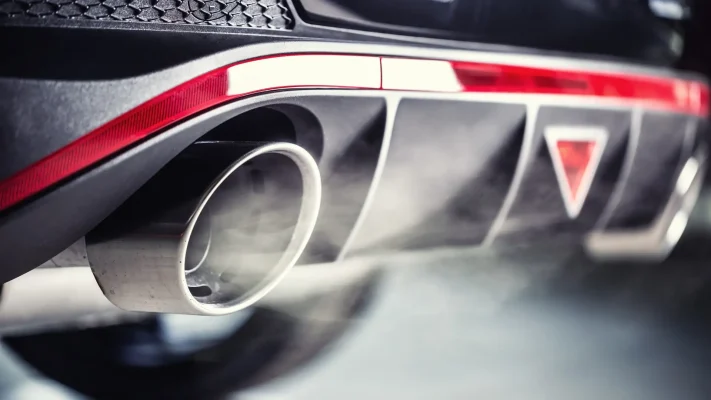
An exhaust smell inside your car should be taken seriously because exhaust gases are supposed to leave through the tailpipe, not enter the passenger cabin. If the smell is strong or persistent, or anyone develops headache, dizziness, nausea or unusual fatigue, move to fresh air, avoid continuing to drive normally, and have the cause inspected.
The smell does not identify the failed part. An exhaust leak is one possibility, but fuel, oil and cooling-system problems can create odours that drivers sometimes describe as “exhaust.”
Why Exhaust Fumes Can Enter the Passenger Cabin
Exhaust gases can enter the cabin when there is a leak ahead of the tailpipe or when airflow around the vehicle draws fumes toward an opening or ventilation intake. The source can be near the engine, under the floor or farther back in the exhaust system.
A vehicle’s exhaust system includes the exhaust manifold, pipes, flex sections, catalytic converter, resonator, muffler, gaskets, flanges, clamps and hangers. A leak at a damaged section or connection can change where the gases leave the system.
Transport Canada recommends checking for exhaust-system leaks before winter because a leak can allow carbon monoxide to enter the vehicle. Health Canada describes carbon monoxide as colourless, tasteless and odourless, so you cannot rely on smell alone to judge whether it is present. If you notice fumes inside the cabin, an exhaust system inspection can help identify whether there is a leak and where it is coming from.
Why the Smell May Be Worse at Idle or in Traffic
An exhaust smell that is strongest while idling can be related to the way fumes collect around the vehicle.
When a vehicle is moving, airflow can carry exhaust away. At a stoplight, in a drive-through or while warming up, there is less airflow to disperse fumes. If there is a leak near the front of the exhaust system, gases may linger near the engine bay or floor and reach the fresh-air intake near the base of the windshield.
Note whether the smell appears:
- Only when stopped
- During acceleration
- With the heater or defroster on
- After a cold start
- Only after the engine is warm
- At highway speed
Tell the technician exactly when the smell occurs. Intermittent problems are easier to diagnose when the conditions that trigger them can be reproduced.
Why Exhaust Smell Can Come Through the Vents
The heating and ventilation system draws outside air into the cabin in fresh-air mode. If exhaust gases are collecting near the air intake, the blower can make the smell more noticeable through the vents. That doesn’t necessarily mean the heater is broken. The ventilation system may simply be carrying an existing odour into the cabin.
Recirculation may reduce some outside odours temporarily, but it does not fix the source. A musty smell may point to an HVAC moisture issue, while a sweet smell can be associated with coolant. The character of the odour and the conditions in which it appears both matter.
What an Exhaust Smell Inside Your Car Can Mean
Several exhaust components can leak as they age, corrode or become damaged.
Exhaust Manifold or Manifold Gasket
The exhaust manifold collects gases leaving the engine. A crack or failed gasket can release exhaust close to the engine bay, where fumes may be more likely to reach the ventilation intake. A manifold leak may also create a ticking or tapping sound, especially during a cold start.
Flex Pipe
The flex pipe allows movement between the engine and the rest of the exhaust system. Repeated movement, corrosion and road exposure can damage this section. A leak may produce a louder exhaust note, hissing or fumes strongest near the front or centre of the vehicle.
Muffler or Resonator
Corrosion can create holes in exhaust pipes, while gaskets and flange connections can fail at joints. A small leak may begin as a faint noise or odour and become more noticeable as the opening grows.
Pipes, Flanges and Gaskets
A corroded muffler or resonator can let gases escape before they reach the tailpipe. These failures may also cause a noticeable change in exhaust sound. The Mufflerman’s guide to common exhaust noises explains how roaring, hissing, tapping and rattling can provide additional clues.
Exhaust Smell Is Not the Same as Carbon Monoxide Smell
Carbon monoxide has no smell. What you recognize as “exhaust” comes from other combustion by-products and odours. If exhaust gases are getting into the cabin, carbon monoxide may also be present even though the carbon monoxide itself cannot be smelled. Health Canada lists headache, dizziness, weakness, nausea, vomiting, chest pain and confusion among symptoms associated with carbon monoxide exposure.
If occupants develop symptoms while inside a vehicle, move to fresh air and seek medical attention as appropriate. Do not use the absence of a strong smell as proof that the cabin is safe.
Could the Smell Be Something Other Than an Exhaust Leak?
Yes. Several vehicle problems create odours that can be confused with exhaust.
A raw gasoline smell may indicate a fuel-system issue and should be inspected promptly. Burning oil can create an acrid smell if oil reaches a hot engine or exhaust component. A sweet smell may indicate coolant.
A rich-running engine or another combustion problem can also change the odour from the tailpipe. If the exhaust system does not show an obvious leak, engine diagnostics may be needed to identify why the vehicle is producing an abnormal smell. Useful details include warning lights, rough idle, reduced fuel economy, smoke colour, fluid leaks and whether the odour changes during acceleration.
Why Ontario Winters Can Expose Exhaust Problems
Winter is hard on exhaust components because they sit underneath the vehicle where they are exposed to water, slush, road debris and road salt.
Short trips can add moisture-related stress. Exhaust systems heat up during driving and cool after shutdown, which creates condensation. Vehicles that make frequent short trips may not keep the exhaust hot for as long as vehicles driven for extended periods.
Cold weather also means closed windows and more frequent heater and defroster use, which can make cabin odours more noticeable. Transport Canada includes exhaust leak checks in its winter vehicle preparation guidance. If a new smell appears during the fall, it is worth having it checked before colder weather becomes routine.
When Should You Stop Driving?
Stop driving if exhaust fumes are clearly entering the passenger compartment. A persistent cabin exhaust smell needs prompt attention.
Stop using the vehicle and move to fresh air if:
- The smell is strong or worsening
- Anyone develops headache, dizziness, nausea, weakness or confusion
- You see smoke entering the cabin
- The exhaust suddenly becomes much louder
- The vehicle runs poorly or a warning light is flashing
- You suspect a fuel leak
Never idle a vehicle in a closed garage. If you are uncertain whether it is safe to drive to a shop, arrange assistance instead of guessing.
What a Technician May Check
Diagnosis usually starts by confirming the symptom and inspecting the exhaust system from the engine toward the tailpipe. A technician may look for corrosion, cracks, loose connections, damaged gaskets, broken hangers and signs of escaping exhaust around joints.
The inspection may also include the engine bay and related systems if there is no obvious exhaust leak. A scan tool can help when warning lights or engine-performance symptoms suggest a combustion or emissions fault. A smell alone cannot identify the exact repair. A failed gasket and a corroded pipe can create similar symptoms but require different fixes.
Get a New Exhaust Smell Checked Promptly
A new exhaust smell inside the car is not a symptom to ignore. The exhaust system is designed to carry combustion gases away from the passenger compartment, so fumes inside the vehicle deserve attention.
Write down when the smell occurs, whether it comes through the vents, whether it is worse at idle and whether the exhaust sounds different. Those details can help with diagnosis. The Mufflerman has service centres across Southern Ontario. Find your nearest Mufflerman location if you need an exhaust inspection or help tracking down an unusual vehicle odour.
Frequently Asked Questions
A persistent exhaust smell inside the cabin should be treated as a reason to have the vehicle inspected promptly. If the smell is strong or anyone develops symptoms such as headache, dizziness, nausea or confusion, move to fresh air and do not continue driving normally.
The ventilation system may be drawing outside air from an area where exhaust fumes are collecting near the vehicle. The heater or fan may make an existing leak more noticeable without being the original source.
At idle, there is less airflow moving exhaust away from the vehicle, so fumes from a leak can collect around the body or near the fresh-air intake. That timing can help a technician narrow the inspection.
Yes, a damaged flex pipe can let exhaust escape before it reaches the tailpipe. Because the flex section is often toward the front or middle of the vehicle, a leak may also be accompanied by hissing or increased exhaust noise.
An exhaust leak can create a route for combustion gases to enter the cabin, and those gases can include carbon monoxide. Carbon monoxide itself is odourless, so smell strength cannot be used to measure the level of risk.