Yes, you can sometimes replace two winter tires, but replacing all four is generally the better choice for balanced traction and predictable handling. Before deciding, compare the remaining tires for tread depth, age, size, type and overall condition, and check the vehicle manufacturer’s guidance, especially if you drive an AWD or 4WD vehicle.
The real question is whether the four tires will still work together as a matched set when roads are cold, wet, snowy or icy.
Why 4 Matching Winter Tires Matter
Four matching winter tires give the vehicle more consistent grip at all four corners. Transport Canada recommends installing winter tires in sets of four and says the same type, size, speed rating and load index should be used on all four wheels to help maintain vehicle stability.
That matters because the front and rear tires do different jobs. The front tires steer, while all four tires contribute to braking and stability. If one axle has substantially more grip than the other, the vehicle may react differently during a hard stop, lane change or slippery turn.
This is also why installing winter tires on only two wheels while leaving all-season or summer tires on the other two is not a good winter setup. If you’re not sure how the tires currently on your vehicle compare, a tire inspection and service can confirm tread depth, tire condition and whether uneven wear points to another problem.
Can You Replace Two Winter Tires Instead of All Four?
You can sometimes replace two winter tires when the remaining pair is still in good condition and the replacement tires can be properly matched. It should not be treated as an automatic cost-saving option.
A technician should consider:
- Tread depth on all four tires
- Age and condition of the remaining pair
- Tire size and construction
- Load index and speed rating
- Tread pattern and tire model
- The vehicle manufacturer’s requirements
- Whether the vehicle uses AWD or 4WD
Michelin Canada recommends replacing all four tires at once for maximum safety and even traction. When only two new tires are installed, Michelin advises using the same size and type as the existing tires and placing the new pair on the rear axle. The exact decision can vary by vehicle. Some manufacturers set tighter limits on tread-depth or circumference differences, so the owner’s manual matters.
Winter Tire Tread Depth Matters Before the Snow Arrives
Winter tires need enough tread to move water and slush away from the contact patch and create biting edges in snow. A tire can still have visible tread and yet be too worn to deliver the winter performance you expect.
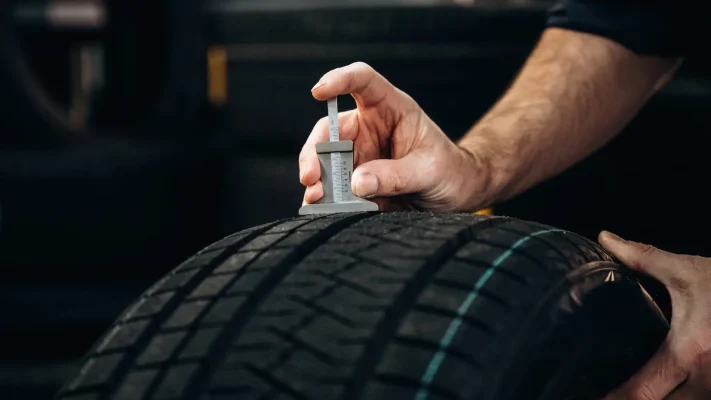
Transport Canada advises drivers not to use tires worn close to 4 mm, or 5/32 of an inch, on snow-covered roads. Its winter preparation guidance also recommends at least 4 mm of tread depth for the safest winter driving. Measure all four tires, not just the one that looks worst. Check the inner, centre and outer portions of the tread because alignment or suspension problems can create uneven wear.
Also look for:
- Cracks in the sidewall
- Bulges or bubbles
- Exposed cords
- Cuts or punctures
- Uneven wear
- Repeated pressure loss
If two tires are near the end of their useful winter tread and the other two are not far behind, replacing the complete set may make more sense than creating a large tread-depth difference for one season.
AWD and 4WD Vehicles Need Extra Attention
AWD and 4WD systems can be more sensitive to differences in tire diameter and circumference. New tires have deeper tread than worn tires, which means their rolling circumference may be slightly different.
Michelin notes that AWD and 4WD vehicles may require tires with closely matched diameters and advises drivers to follow the vehicle manufacturer’s specifications. A replacement that looks correct by size alone may still have much deeper tread than the other three tires. Don’t rely on a universal rule for every AWD or 4WD model. Check the owner’s manual and have the tread depth of all four tires measured before approving a partial replacement.
Do New Winter Tires Always Go on the Rear?
If only two tires are being replaced, the new or deeper-tread pair is generally installed on the rear axle to help maintain stability. Michelin recommends rear placement when replacing only two tires because the deeper tread can provide better wet grip and reduce the risk of the rear of the vehicle losing stability.
That may surprise drivers who assume the newest tires should go on the powered axle. Acceleration is only one part of the equation. Rear-axle stability during wet or slippery cornering also matters. Vehicle-specific instructions should still take priority, especially for vehicles with staggered tire sizes or specialized drivetrains.
Check Tire Age, Not Just Tread
Tread depth does not tell you the entire condition of a winter tire. Rubber changes as tires age, and storage conditions, heat, sunlight, mileage and use can all affect deterioration.
The tire’s DOT identification code includes its production date. The final four digits identify the week and year of manufacture. For example, a code ending in 3222 indicates a tire manufactured in the 32nd week of 2022.
Age alone does not mean a tire must be replaced on a specific date. It does mean an older tire deserves a closer inspection for cracking, hardening, damage and other signs of deterioration.
Uneven Wear Can Point to a Problem Beyond the Tires
If two winter tires have worn much faster than the other two, replacing the tires without finding the cause can lead to the same problem again.
Common contributors include incorrect inflation, wheel alignment problems, worn steering components and suspension issues. The Mufflerman’s tire guidance notes that uneven wear may be associated with pressure, balancing, steering, suspension or alignment problems.
Look for one shoulder wearing faster, cupped or scalloped areas, centre wear, or one tire wearing much faster than the matching tire on the same axle. A fall tire change is a good opportunity to find the cause before installing a new set.
When Should You Replace All Four Winter Tires?
Replacing all four is usually the clearest choice when the existing set is heavily worn, mismatched, damaged or no longer appropriate for winter conditions.
A complete set deserves serious consideration when:
- All four tires are approaching 4 mm of tread
- The remaining pair is significantly older than the replacements
- The tires have different sizes, types or tread patterns
- There is sidewall cracking, bulging or other damage
- Your AWD or 4WD manufacturer requires closely matched tread depths
- You are changing to a different winter tire model
- The existing tires have substantial uneven wear
If replacement is needed, you can shop tires for your vehicle before arranging installation. Ontario does not generally require passenger vehicles to use winter tires. The Mufflerman’s guide to Ontario winter tire rules explains the provincial context in more detail.
Get the Tires Checked Before the Fall Rush
The best time to make this decision is before winter weather arrives. Transport Canada notes that all-season and summer tire compounds begin to lose elasticity below about 7°C, while winter tires are designed to remain more flexible at lower temperatures.
Before reinstalling stored winter tires, have all four checked for tread depth, pressure, visible damage and uneven wear. If only two appear to need replacement, ask the shop to compare the remaining pair against the new tires and the vehicle manufacturer’s specifications.
That gives you a decision based on the condition of your actual tires rather than a blanket rule. The Mufflerman has service centres across Southern Ontario. You can find your nearest Mufflerman location to have your winter tires inspected, replaced or installed before colder weather settles in.
Frequently Asked Questions
Sometimes, but the remaining tires need to be compatible and in sufficiently good condition for the four tires to work together predictably. Replacing all four is generally preferred when the remaining pair is significantly worn or the vehicle manufacturer requires closely matched tires.
AWD and 4WD vehicles can be sensitive to differences in tire diameter and tread depth, so matching tires are especially important. Check the owner’s manual because some manufacturers specify the allowable tread or circumference difference between tires.
Transport Canada advises against using tires worn close to 4 mm, or 5/32 of an inch, on snow-covered roads. A tire may still be above the legal minimum yet have too little tread to deliver the winter traction you expect.
Check the DOT identification code on the tire sidewall. The final four digits show the week and year the tire was manufactured, which helps you evaluate age alongside tread depth, cracking and overall condition.
Matching all four tires is preferred because different models can have different tread patterns, compounds and handling characteristics even when the sidewall size is the same. If matching replacements are not available, have a tire professional check compatibility and the vehicle manufacturer’s requirements before mixing tires.